
How Often Should You Change Your Dish Cloth or Sponge?
Your dish cloth touches almost everything in your kitchen. Plates, benches, the sink, the high chair, the spill on the floor you swore you'd get to later. Which is exactly why it's worth knowing how often to wash it, and when it's time to say goodbye.
Why it matters
Kitchen sponges and dish cloths stay damp, collect food particles and sit in a warm kitchen all day. That's the perfect environment for bacteria to grow. Studies have repeatedly found kitchen sponges to be among the germiest items in the home. When you wipe down a bench with a cloth that's past its best, you're not cleaning it so much as redistributing what's on it.
How often to change a dish cloth
Swap it out every one to two days and put it in the wash. If you've used it to wipe up raw meat juices, egg or a nasty spill, swap it immediately.
A reusable cloth that gets washed regularly can last a long time. A disposable cloth that never gets washed should really go in the bin within a few days.
How often to replace a kitchen sponge
Most sponges should be replaced every one to two weeks, sooner if they smell or look grubby. Sponges are difficult to clean thoroughly, because food and bacteria get trapped deep in the foam. It's one of the reasons so many people are switching to washable cloths instead.
Signs it's time to swap
- It smells sour or musty, even after rinsing
- It feels slimy
- It's stained or discoloured
- It's leaving streaks or smears on your benches
- It's falling apart or shedding bits
How to keep your dish cloth cleaner for longer
- Rinse it thoroughly after every use. Get the food bits and soap out.
- Wring it out well. The less water left in it, the less chance bacteria has to grow.
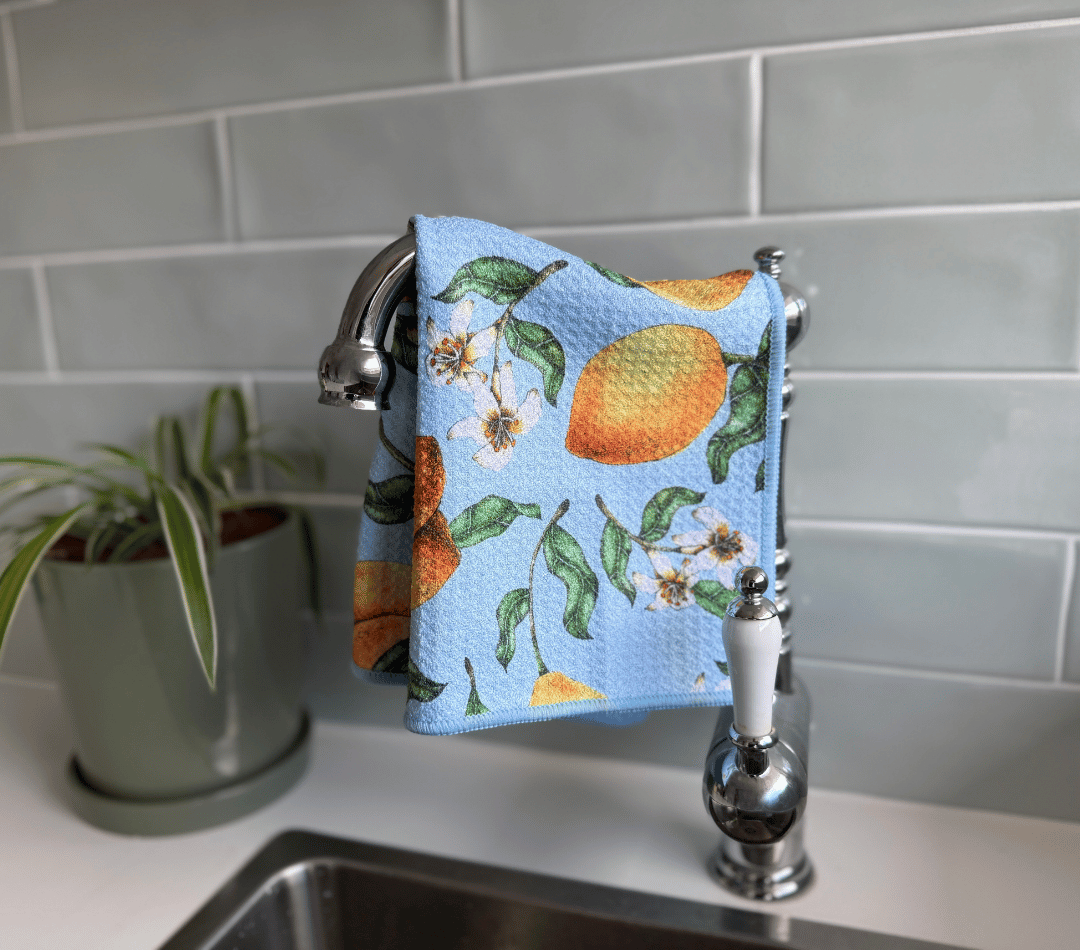
- Hang it to dry. Drape it over the tap or the edge of the sink. Never leave it balled up in the bottom of the sink.
- Have a few on rotation. One in use, one drying, one in the wash.
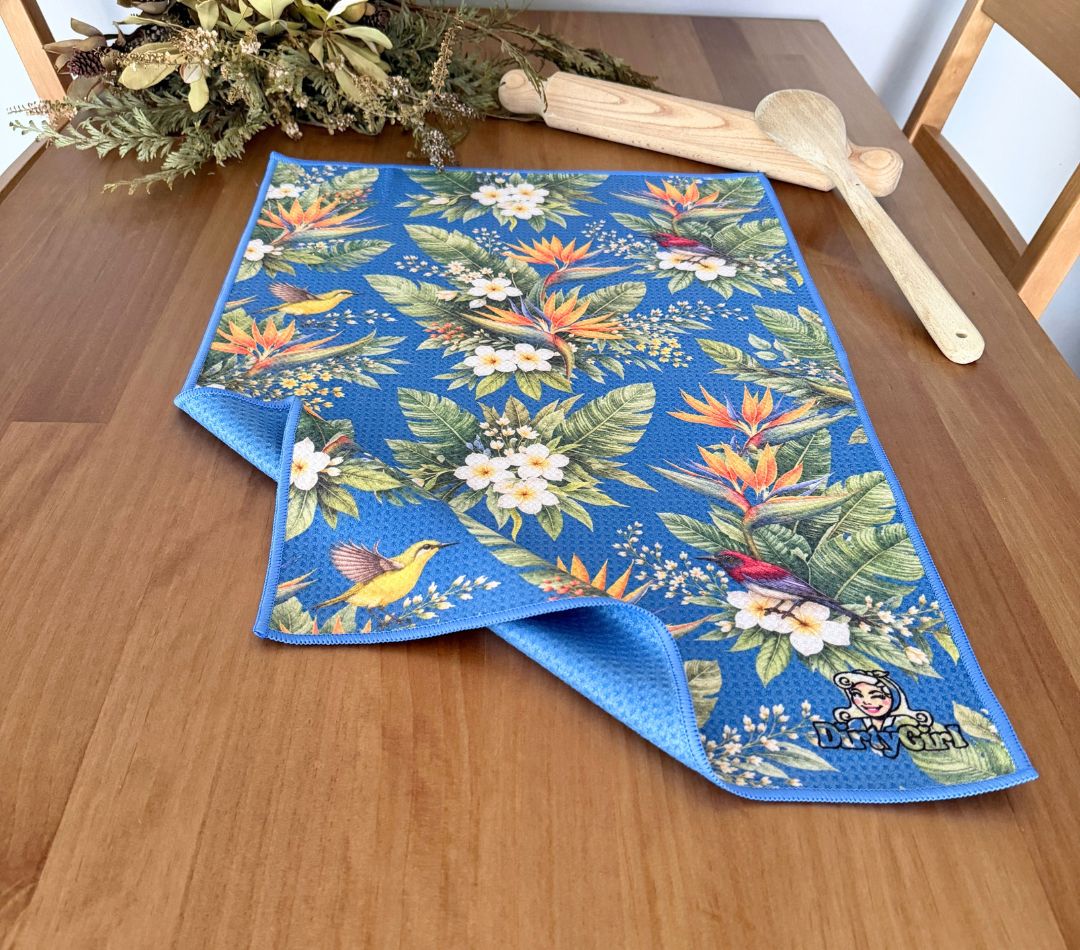
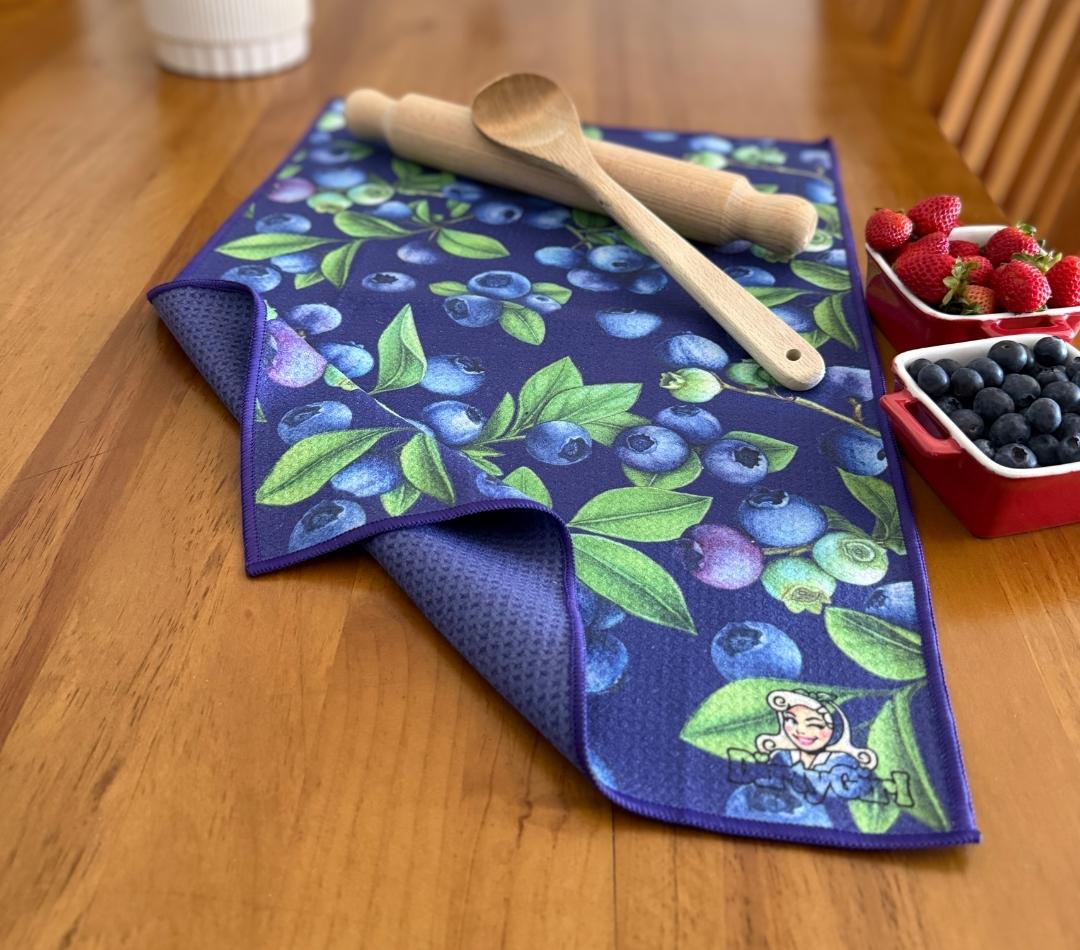
- Use different cloths for different jobs. One for dishes, one for benches, one for floors and spills. Choosing a different print for each job makes it easy to tell them apart.
How to wash a dish cloth
Toss it in the machine with your other kitchen linens and your regular detergent. Add a splash of white vinegar to the softener drawer and skip the fabric softener, which coats the fibres and traps smells. Then dry it fully, ideally in the sun. Always follow the care label: DirtyGirl cloths are washed cold, at 30 degrees or less, and shouldn't go in the dryer.
Why a quick-drying cloth makes a difference
The biggest enemy of a fresh dish cloth is staying damp. Thick cotton cloths and sponges can stay wet for hours, which is when the smell kicks in. DirtyGirl cleaning cloths are made from a polyester and polyamide blend that dries fast and resists odours, so they stay fresher between washes. They double as a dish cloth, bench wipe and drying cloth, and wash up beautifully over and over again.
Dish cloth FAQs
Can I microwave my sponge to clean it?
It's a popular hack, but it doesn't reliably kill everything and can be a fire risk with dry or metallic sponges. Replacing sponges regularly, or switching to a washable cloth, is the safer option.
Can I put dish cloths in the dishwasher?
Some people do, but it doesn't clean fabric as thoroughly as a washing machine and can leave food bits behind. The washing machine is the better choice.
How many dish cloths should I have?
Four to six is a good number for most kitchens. That gives you enough to swap daily and still have a few clean ones in the drawer.
Why does my dish cloth smell so quickly?
It's staying damp for too long. Wring it out properly, hang it to dry and wash it every one to two days. If it smells straight after washing, fabric softener or detergent build-up is the likely culprit.
Ready to ditch the sad sponge? Browse our cleaning cloths and build yourself a rotation you'll actually enjoy using.
Please note: the tips in this post are general information only. Every home, surface, fabric and appliance is different, so always check the manufacturer's care instructions and patch test on a small, hidden area first. Any tips are used at your own risk, and DirtyGirl can't be held responsible for any damage that may result.

Leave a comment
This site is protected by hCaptcha and the hCaptcha Privacy Policy and Terms of Service apply.